Anti-interactive installation based on the story of the singing frog

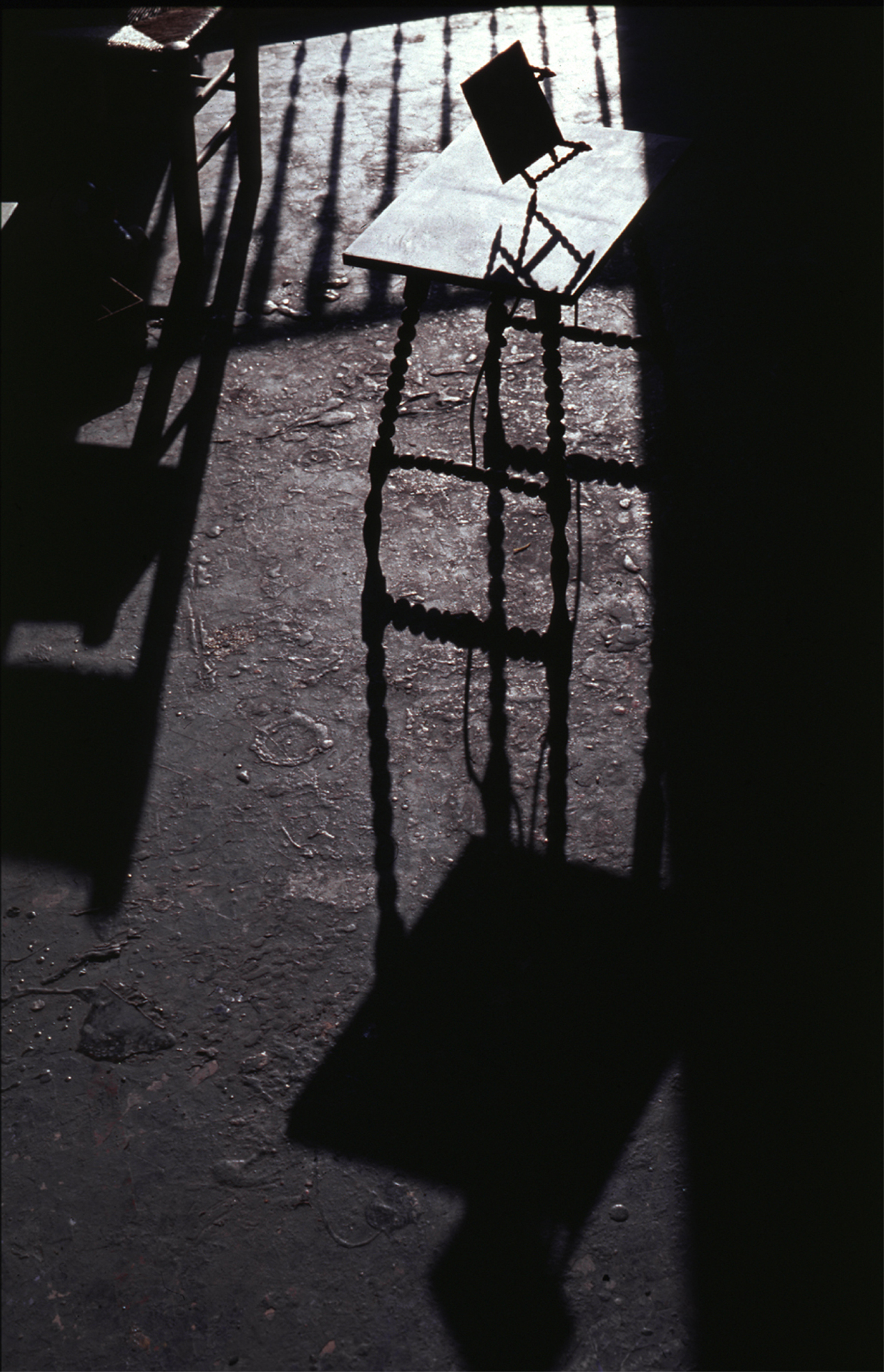
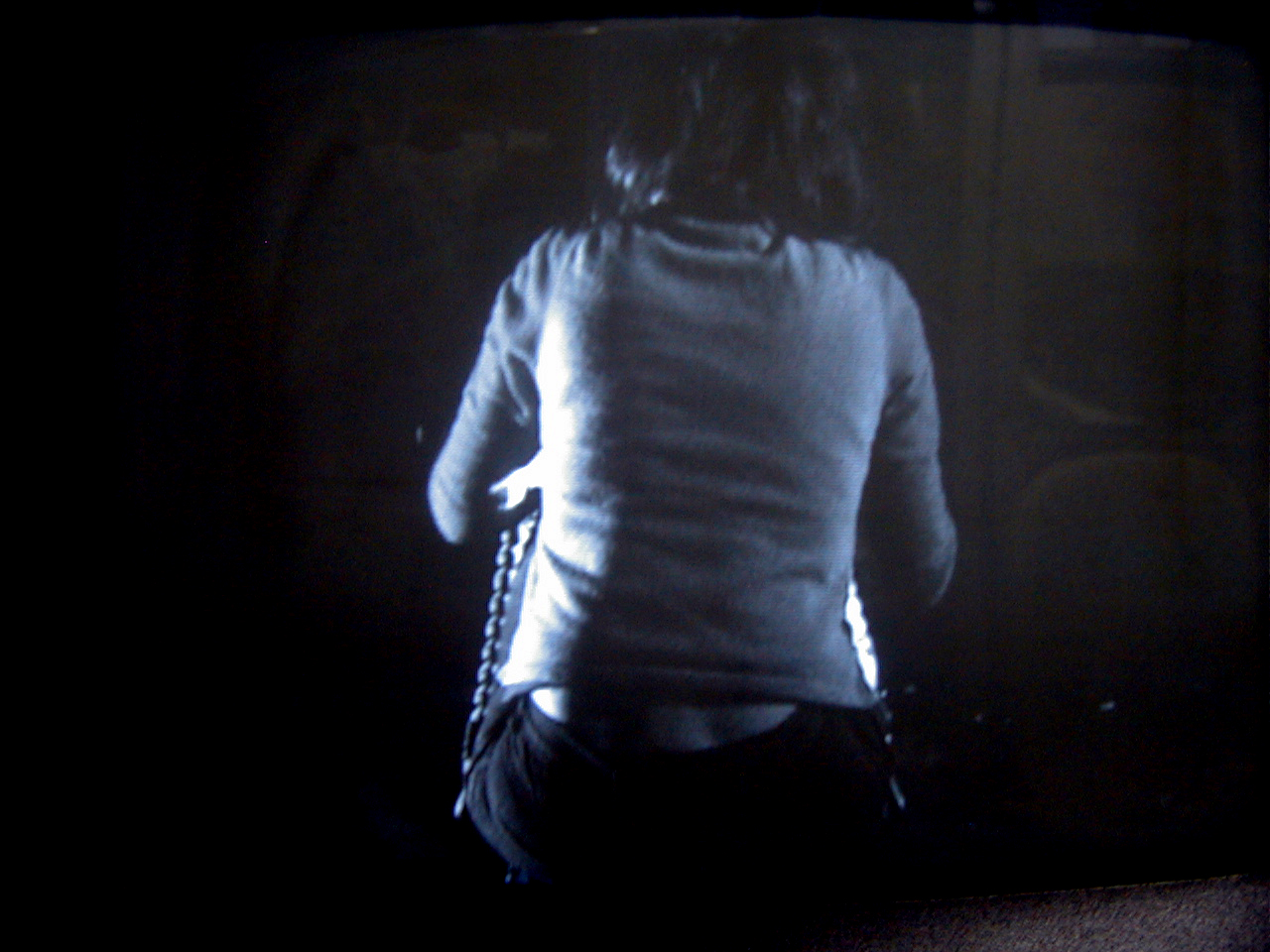
Installation view: Video projections of looped animations controlled by floor sensors. When a person’s presence is detected, a still image is activated, showing a large table with a smaller version placed centrally on top. When the person is absent, the image changes: the small table continually performs a pirouette on one leg, accompanied by the sound of a musical clock. This scene can only be observed through a small security monitor.
The Story of the Singing Frog
In the late 1970s, when cartoons were at the centre of my attention, one about a singing frog was frequently shown on television. The story went like this:
On a torrentially rainy night, the performance of a small provincial circus is about to begin. No spectators arrive. The circus owner, abandoned by everyone and soaked by the rain, stands among the puddles lamenting the latest failure of his show.
Desperate moments—or perhaps hours—pass, until the owner becomes aware of joyful singing coming from somewhere nearby. Suddenly curious about this new presence, he looks around. There is nobody there. Lowering his gaze towards the ground, he discovers a little frog dancing in a puddle and singing like Fred Astaire. The owner quickly cheers up and forgets all the problems that had been weighing him down.
Some time passes, and one day posters appear throughout the city showing the frog dressed like a dandy, in a black tailcoat and top hat, with a walking stick in its hand: The Singing Frog Show — a unique opportunity.
The night of the show arrives. Every ticket is sold. Excitedly, the owner presents the star of the evening. All the lights are directed towards the small table on the stage, where the frog sits in the typical pose of its species. The audience waits. “Croak…” One single sound from the frog breaks the immaculate silence and immediately provokes rebellion among the spectators: shouts, mockery and insults. Within seconds, the circus is empty and demolished as though after a battle. The owner is even more bankrupt and desperate than before. At that moment, awakened as if by providence, the frog begins its magnificent show—just a little too late.
Throughout history, religious and secular traditions alike have preserved accounts of extraordinary experiences that resist ordinary explanation. Whether attributed to divine revelation, mystical insight or supernatural encounter, such experiences have usually reached us only through the testimony of those who claimed to have witnessed them. Gospels, saints' lives, apocryphal writings and countless oral traditions all rely on the same fragile premise: that one person's experience can be accepted by others, even though it cannot be directly shared.
Yet every testimony also carries the possibility of disbelief. From Saint Thomas' demand to see with his own eyes to the contemporary authority of scientific, medical and psychological explanation, extraordinary experience is continually subjected to verification. What cannot be reproduced or demonstrated easily becomes illusion, delusion or fabrication.
Perhaps this is why extraordinary experience often remains a secret rather than a revelation. Not because it cannot be spoken of, but because the very conditions that would make it publicly visible also make it disappear. Like the singing frog, it exists only for the solitary witness; the moment it becomes a spectacle, it ceases to happen. The burden lies not in the experience itself, but in its resistance to becoming a shared reality.
Historia de la rana cantante
Instalación anti-interactiva sobre el secreto que no debe ser visto.
A finales de los años setenta, justo en la época en que los dibujos animados ocupaban el centro de mi interés, solían emitir por televisión uno sobre una rana cantante. La historia seguía así:
La noche del estreno de un pequeño circo provincial cae una lluvia torrencial y no aparece ni un solo espectador. El dueño del circo, solo, empapado por la lluvia, rodeado de barro y charcos, lamenta el peor fracaso de su espectáculo.
Pasan momentos—o quizá horas—de desesperación, hasta que el dueño toma conciencia de un canto alegre que se escucha desde hace tiempo. Intrigado por el descubrimiento de una nueva presencia a su alrededor, mira en todas direcciones, pero no hay nadie. Al bajar la mirada hacia el suelo queda estupefacto: una rana baila en el charco y canta al estilo de Fred Astaire. Al dueño le vuelven rápidamente los ánimos.
Al cabo de cierto tiempo, por toda la ciudad aparecen carteles que muestran a la rana vestida como un dandy, con frac negro, sombrero de copa y bastón en la mano: Show de la rana cantante. Única oportunidad.
Llega la noche del estreno. Todas las entradas están agotadas. El dueño, excitado, presenta a la estrella de la noche. Todos los focos se dirigen hacia la pequeña mesa donde se encuentra la rana, sentada e inmóvil en la postura típica de su especie. Pasan los minutos de espera. “Croac…” Un solo sonido de la rana rompe el silencio impecable y provoca de inmediato una rebelión entre los espectadores: gritos, burlas e insultos. En pocos segundos, el circo queda vacío y demolido como después de una batalla. El dueño está aún más arruinado y desesperado. En ese momento, como despertada por la providencia, la rana comienza su maravilloso espectáculo con un poco de retraso.
En antiguos textos religiosos y profanos, hombres y mujeres iluminados por la luz de la revelación divina nos han legado testimonios de experiencias extraordinarias: evangelios, relatos y escritos apócrifos asociados a Santa Teresa, San Pablo, San Francisco de Asís, Mahoma y muchos otros.
En la actualidad, esta actitud encuentra además apoyo en los discursos científicos, médicos y psicológicos, orientados a explicar y desmitificar aquello que se aparta de lo ordinario y de lo conocido.
Una persona “iluminada” en el mundo contemporáneo podría enfrentarse a una larga cadena de discriminaciones. Podría perder su trabajo, ser evitada por sus amistades o abandonada por su pareja; quizá tampoco encontraría reconocimiento en las autoridades religiosas y, finalmente, su propia familia podría internarla en una institución psiquiátrica. Incluso si lograra atravesar ese vértigo, probablemente quedaría condenada al aislamiento social y emocional durante el resto de su vida.
Quizá por eso la experiencia extraordinaria permanece más fácilmente como un secreto que como una revelación. No porque sea imposible hablar de ella, sino porque las condiciones necesarias para compartirla son precisamente las que la hacen desaparecer. Como la rana cantante, sólo existe para quien la presencia en soledad; en el momento en que intenta mostrarse a los demás, deja de acontecer. Su verdadero peso no reside en la experiencia misma, sino en la imposibilidad de transmitirla plenamente.