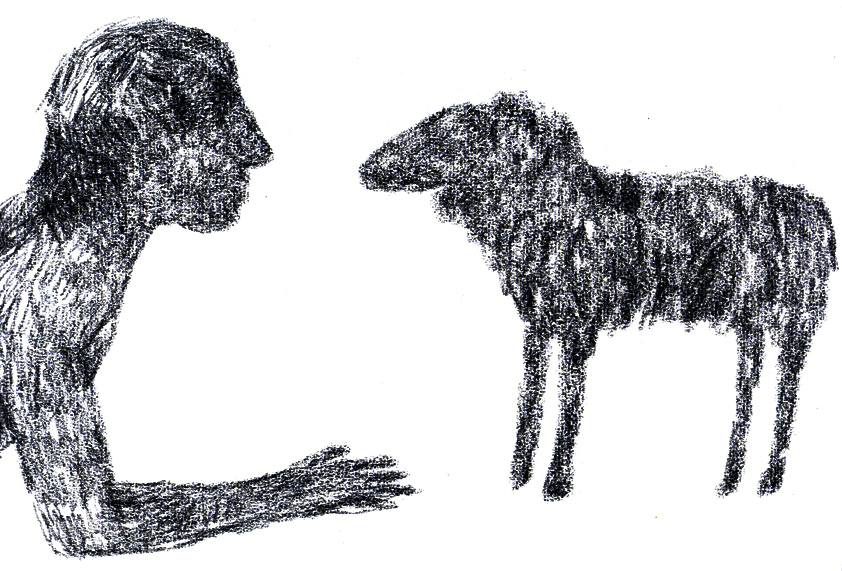
Even before I started school, I was given a nickname. My given name is Božica, but they also started calling me Gara.
It was an older neighbour, Boža, who affectionately began calling me that: “My Gara, you are my Gara.”
Gara was a common name for a black sheep in a flock, derived from garav or garava, meaning dark or blackened. Every sheep had its own name.
“I don’t want to be Gara,” I protested.
And it really hurt me, because I had a dark complexion, I was thin and dark, with black hair, while all the other children were fairer, with brown or blond hair.
Soon the nickname spread, and the other children began calling me that too and teasing me:
“Gara, Gara, where is your flock?”
My mother even went to Boža to protest:
“Why did you give her a name like that, so that the other children can make fun of her?”
And he replied:
“Out of thirty sheep in a flock, there is only one Gara — one, and a precious one.”
And indeed, when there was a black sheep in a flock, people regarded it as a good sign, as though something fortunate was about to happen.
A black lamb was considered more valuable than a white one and was usually kept for breeding, while the wool of black sheep was prized for its natural colour.
I did not like the name Božica1 either — you see, I changed that too.
When I came to Belgrade, people immediately started calling me Bojana or Boja2. Božica sounded strange to them and was not particularly common at the time, so they renamed me.
And I never mentioned my nickname again.