I wanted to learn a trade, and eventually they agreed to let me. My mother had already arranged for me to go and stay with her brother in Belgrade.
It was 1940. I left in August.
It was very difficult for me to leave my brothers, sisters and parents, and it seemed as though the farewell lasted for days. Every day brought another round of advice from my aunt, my mother, or another aunt.
But the saddest moment was when my father saw me off.
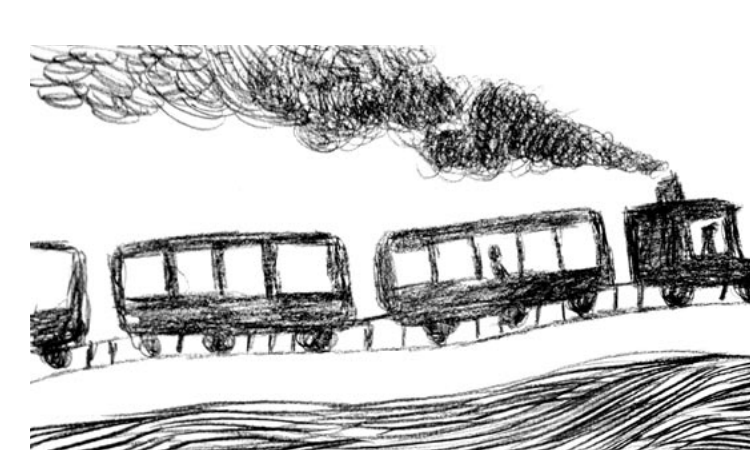
We boarded the train in Kukača and travelled to Zagreb. In Zagreb I had to change trains for Belgrade.
That was where he said goodbye to me. He held himself together, although I thought I saw a tear in his eye.
And he said only a few words to me:
“Be good, do as you’re told, and never take anything from anyone džabe.”1
Well, I couldn’t understand that word, džabe. Badava, džabe — it was some foreign word, Turkish or whatever, I didn’t know.
But later, as I grew older, I always remembered that word and kept coming back to it, wondering: what was it that I must never do?
The journey took a very long time. To me it seemed like an eternity.
It was a local passenger train. It went almost like a tram, stopping everywhere along the way. And whenever trains had to pass each other, we would sometimes wait for an entire hour for the express train to go by.
I didn’t sleep a wink all night.
I didn’t know there was a toilet on the train, so I didn’t go to the toilet either.
In the morning I got off at Danube Station.