Meanwhile, in Primišlje, the beginning of the Second World War was already
making itself felt.
“This was the house, this big house here. This was the yard, fenced in
the same way. And it was a beautiful house. Downstairs there was the
summer kitchen, the cellar, the storerooms...
It was a very old house. Grandfather had gone to America and sent them
money, and that was how they managed to build such a large, beautiful
house. There were many other houses around here too.”
“What kind of stone is this, Nana?”
“It’s ordinary stone, perfectly ordinary stone.”
“This was destroyed in 1941, not during the recent war.”
My uncle, my aunt and their six children lived here. Their eldest son
was twenty-one years old.
The war began on April 6, and six days later, on April 12, it was Easter.
My uncle had a godfather in Kamenica who was a Croat. The people from
his village forced him to go, saying:
“You have to be the first to go and kill your godfather.”
One was a Serb and the other a Croat, but they were godfathers and
good friends.
So he came here, and they greeted him:
“Come in, godfather, come and celebrate Easter with us!”
They were happy to see him because conflict had already begun between
Catholics and Orthodox Christians.
But he said:
“No, no, I can’t, godfather. I came to tell you something, but I don’t
want to say it in front of the children and your wife.”
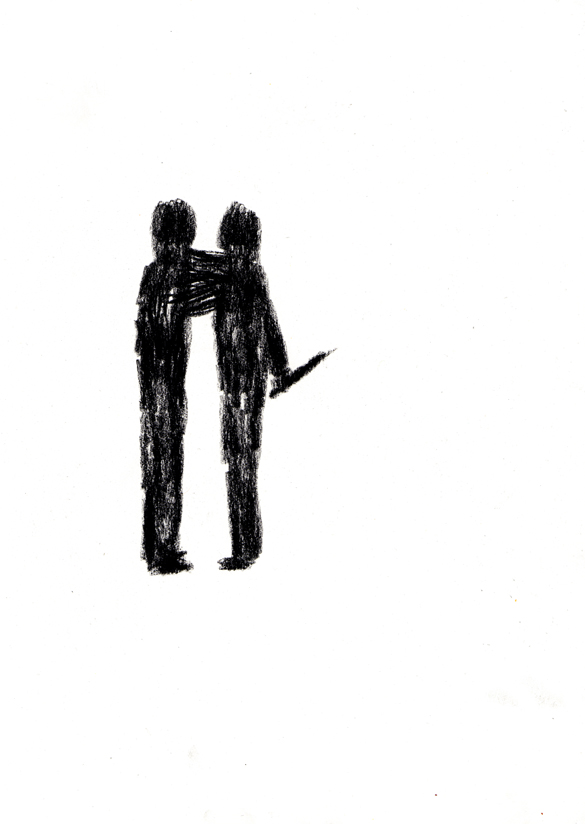
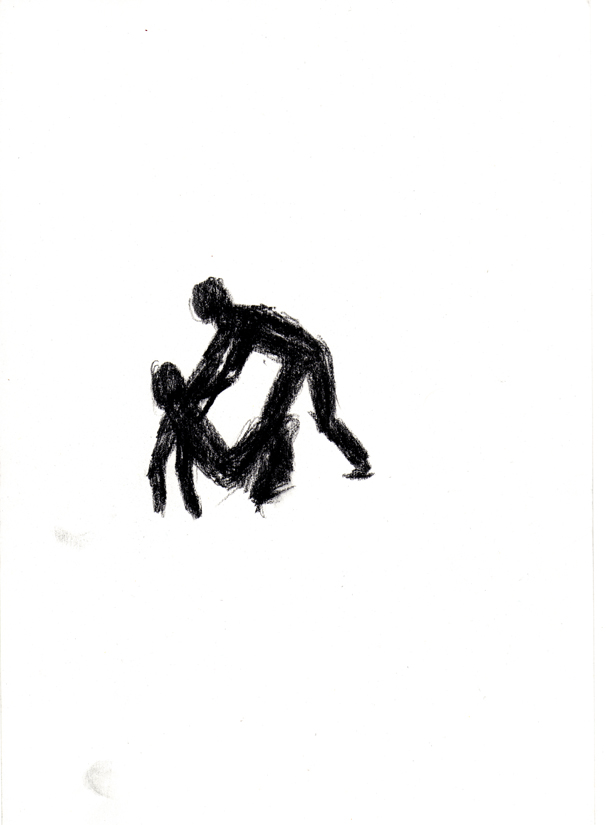
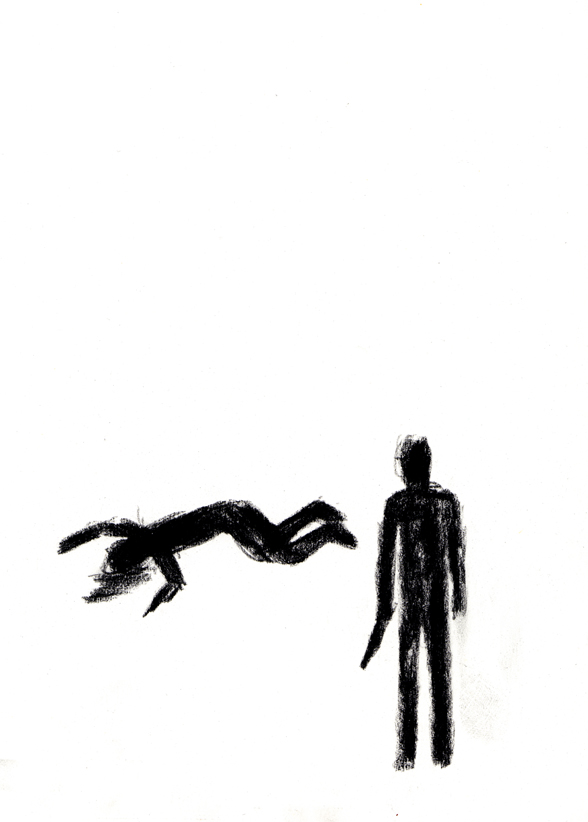
So the two of them went out behind the house, and he slaughtered him.
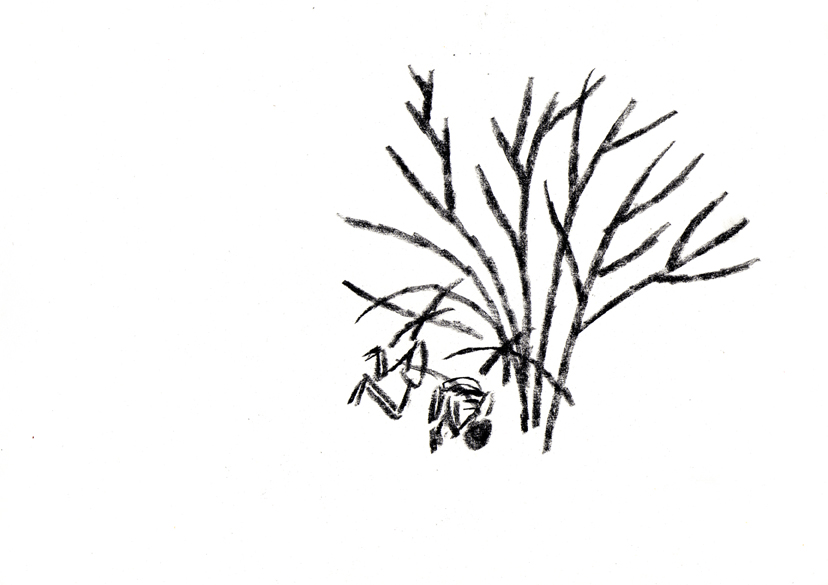
When my aunt saw what had happened, she lost her mind.
After that she lived wandering through the surrounding valleys and forests.
First the children were sent away somewhere, while the eldest son, who was
already grown up, joined the Partisans.
I remember seeing her later, wandering through the woods, barefoot and
poorly dressed. She would hide among the rocks and in abandoned places,
wherever she could find shelter from the cold.
That was one of my uncles. His name was Ilija.
My mother’s other two brothers, Rade and Đura, were in Belgrade.
It was to Đura that I came when I arrived in Belgrade in 1940.
He met me at Danube Station in his taxi.
Then it was discovered in the neighbourhood that some young people were
gathering illegally in the house where I used to go, supposedly to learn
the tailoring trade, and where they were learning first aid.
One evening there was a police raid. They questioned the young people,
asking who else had been coming there, and somehow my name was mentioned.
By then I was already staying with some people I didn’t know, where my
uncle had taken me after the war began so that I would be somewhere safe.
The next morning, a friend of my uncle’s came and told me to get ready
quickly and go with him to Belgrade.
So I went with him.
It was winter, February, and bitterly cold. The Sava was frozen.
He had a German pass that allowed him to enter Belgrade because he
worked there.
He took me across the ice.
We didn’t cross by the bridge — the bridge had been destroyed, although
people could still cross there on foot. Instead, he smuggled me across
the frozen river.
When we reached the other side, he said to me:
“Now you know where to go.”
But I didn’t know where to go.
I just stood there, in knee-high socks and some short little jacket,
freezing, wondering which way to turn.
And I stood there and said to myself:
“There is so much of my Mrežnica here. The Mrežnica has made it here,
and so have I. My grandmother has made it here too, from her youth,
and so has her memory.”
That was all I possessed at that moment.
And somehow this filled me with fresh ideas and gave me strength.
I came to myself and remembered:
“Ah, Uncle Mihajlović works in Knez Mihailova Street — but what number?”
It was like bingo: “Say a number, say a number.”
And then I thought:
“TATA, NAMA,1
this one, that one... one is at number five, six, seven...
where could it be? Nineteen or twenty-one?”
I said:
“Twenty-one.”
I went there and asked:
“Is there a tailor’s shop here?”
They said:
“There is one on the first floor.”
And there I found Uncle Mihajlović.
That is how I guessed the number, because I didn’t know it.
I knew it was in Knez Mihailova Street, but I didn’t know the number.