And then I remembered that a certain Mr Mihajlović had been staying at my uncle’s place, a tailor with two children, and I used to spend time with his daughter Zorica.
And I remembered Zorica saying that her father worked in Knez Mihailova Street. How I remembered the number, I really don’t know. I only knew it was Knez Mihailova.
As for the number, it just came to me, as if someone had asked me in a quiz:
“Come on, say a number.”
And I said:
“Twenty-one.”
So I went to 21 Knez Mihailova Street. I asked:
“Is there a men’s tailor shop here?”
They told me it was on the first floor.
I went upstairs and saw Mr Mihajlović. He recognised me and I recognised him, and we greeted each other warmly.
When he finished work at four in the afternoon, I went home with him.
When we got there, I found Zorica and Vlada, her younger brother, and I thought:
“Now I’ve solved all my problems. Now I’ll live with a family, with people I know.”
When their mother came home from work at the mint, Aunt Milesa, she bristled and said:
“Why did you bring her here? Don’t you know we have raids every night?”
Every night the Feldgendarmerie would come and take someone away. This was Banovo Brdo, and people often passed through who were taking food into the woods for those who had joined the Partisans.
It was 1942.
They were afraid the Germans might come and search their flat. If they found me there, with no papers or anything to identify me, they would immediately become suspicious, and they could force me to talk.
I had nothing with me at all, only the clothes I was wearing.
They let me stay there for two or three days, although she was angry about it.
One night there was a raid.
When they heard them coming, they took me out to the shed where the firewood was kept. I stayed there for two days.
When things had quietened down a little, they opened the door and said:
“Go.”
During the night snow had fallen, and you could just make out a path showing where to go.
I didn’t walk along the streets, where I might run into a patrol, soldiers or something like that. Instead, I went across the Hippodrome. Somehow that seemed safest to me.
When I crossed the Topčider River and went through Topčider, I headed towards Dedinje.
Once before, I had gone there with my uncle to visit my three cousins who lived in Užička Street, at the home of Ivo Perović, one of the King’s regents.
All three of them worked there. When the Germans came, everyone had been moved out of Užička Street, so they too were somewhere in Dedinje, but I didn’t know the address.
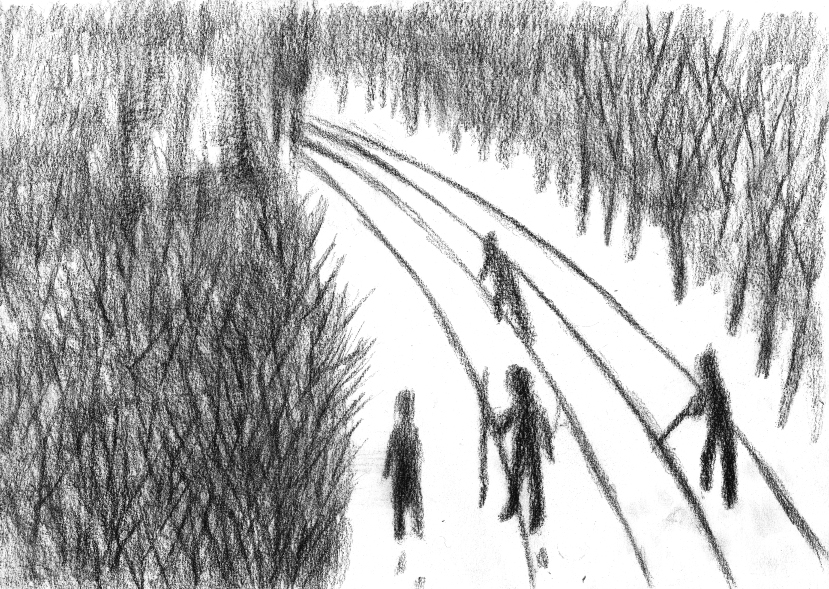
By sheer luck, I came across some men clearing snow from the tram tracks. They asked me:
“Where are you going, little girl?”
I said:
“I’m trying to get somewhere in Dedinje. I think my cousin is there. They had a delicatessen shop; perhaps they still have some kind of shop.”
“Yes, yes,” one of them said. “In Dedinje, 8 Lady Cowdray Street — Milka and Žika Vićentić.”
And again I was overjoyed. One moment there was sorrow, and then suddenly some joy again.
I quickly made my way uphill along Topčiderska Street, from Topčider to Dedinje.
When I arrived, they were surprised to see me.
Refugees had already been coming to stay with them — my aunt and some other relatives — so they had had quite enough of refugees by then. Still, they welcomed me warmly.